
Failed ADA inspections are more common than most property owners realize. In California, strict enforcement of Title 24 and federal ADA standards means even small mistakes can result in corrections, delays, and costly reconstruction.
Many projects fail inspection not because accessibility was ignored—but because it was done incorrectly.
Understanding why ADA inspections fail is critical to avoiding rework, failed permits, and ongoing legal exposure.
The most common causes of ADA inspection failures include:
• Improper slopes and grading
• Incomplete path of travel compliance
• Incorrect dimensions and clearances
• Noncompliant installations by inexperienced contractors
• Lack of coordination between design, permits, and construction
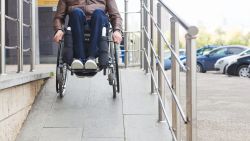
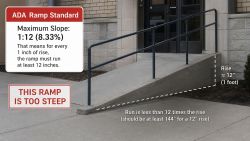
Slope violations are the most frequent reason ADA work fails inspection. Exterior paths, parking areas, and ramps must meet strict slope and cross-slope tolerances, often within fractions of an inch.
Many contractors build right to the maximum allowable slope, which leaves no margin for error. Once concrete or asphalt is installed, even minor deviations can push slopes out of compliance.
This results in failed inspections and, in many cases, complete removal and replacement of newly installed work.
One of the biggest misconceptions is that fixing a single issue—like adding ADA parking—makes a property compliant. In reality, ADA requires a continuous accessible path of travel from parking and public sidewalks to entrances and key service areas.
Common failures include:
- Accessible parking without a compliant route to the entrance
- Missing or noncompliant curb ramps
- Obstructed or narrow walkways
- Improper transitions between surfaces
If any portion of the path fails, the entire route is considered noncompliant.

ADA compliance is extremely precise. Door clearances, restroom layouts, counter heights, and maneuvering spaces must meet exact dimensional requirements.
Even small errors—such as insufficient turning radius, incorrect grab bar placement, or tight door clearances—can trigger inspection failures.
These issues are often missed when plans are not verified in the field or when installers are unfamiliar with ADA tolerances.

Many ADA failures occur because the design, permitting, and construction phases are handled by separate teams without proper coordination.
Plans may look compliant on paper but fail in real-world conditions due to grading limitations, existing site constraints, or improper execution.
Without field verification and ADA-specific expertise, projects often require revisions after inspection—leading to delays and added costs.
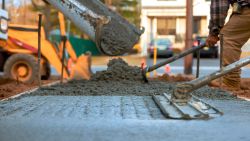
Not all contractors understand ADA compliance requirements—especially under California Title 24, which is often stricter than federal standards.
Common issues include:
- Incorrect ramp construction
- Improper striping and signage placement
- Failure to account for slope tolerances
- Overlooking required accessibility elements
These mistakes frequently result in failed inspections and leave property owners exposed to repeat corrections or lawsuits.

Successful ADA compliance requires a coordinated approach from start to finish.
Best practices include:
- Conducting a CASp inspection before design
- Developing plans based on real site conditions
- Coordinating ADA permits properly
- Using experienced ADA-focused contractors
- Verifying slopes, dimensions, and clearances during construction
ACR Design & Build provides a full design-build approach—handling CASp inspections, ADA consulting, permits, and construction under one accountable team to ensure projects pass inspection the first time.

What is the most common reason ADA inspections fail?
Improper slopes and grading are the most frequent causes of failure.
Can small ADA mistakes really cause a failed inspection?
Yes. ADA compliance is highly precise, and even minor deviations can result in corrections.
Does fixing one ADA issue make a property compliant?
No. Compliance requires a complete accessible path of travel, not isolated fixes.
Why do new ADA projects still fail inspections?
Many projects fail due to poor execution, incorrect measurements, or lack of ADA expertise during construction.
How can property owners avoid ADA inspection failures?
Working with a qualified ADA design-build team and performing a CASp inspection before construction significantly reduces risk.
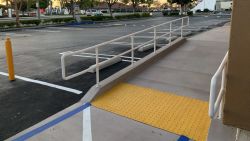


Learn ADA path of travel requirements in California, including entrances, parking, restrooms, and route accessibility rules required during renovations and tenant improvements....
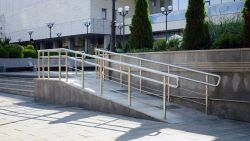
ADA handicap ramp violations are one of the most common accessibility failures in California. Learn slope, width, landing, and Title 24 requirements to avoid lawsuits and failed inspections....

Ignoring accessibility compliance exposes businesses to fines, lawsuits, project delays, and expensive rework. Small issues can have big consequences......