
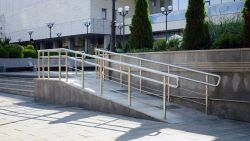
ADA handicap ramp violations are one of the most common accessibility failures in California. Improper slopes, narrow widths, missing landings, or noncompliant handrails can lead to CASp report findings, city corrections, and costly ADA lawsuits.
This guide explains California ADA ramp requirements, including slope limits, width rules, landing dimensions, and Title 24 compliance considerations to help property owners reduce risk and maintain accessibility.
Quick ADA Ramp Requirements (California):
• Maximum slope: 1:12 (8.33%)
• Maximum cross slope: 1:48 (2%)
• Minimum clear width: 36 inches
• Maximum rise per run: 30 inches
• Minimum landing length: 60 inches
• Handrails required if rise exceeds: 6 inches
• Surface must be: firm, stable, slip-resistant
• California Title 24 enforces stricter accessibility standards
Handicap ramps must meet strict ADA and California Title 24 accessibility standards to ensure safe access for wheelchair users and individuals with limited mobility. Even small design errors in slope, landing size, or clearances can trigger legal exposure and compliance violations.
CASp inspections frequently identify ramps as high-risk barriers, making proactive evaluation and correction essential for commercial property owners.
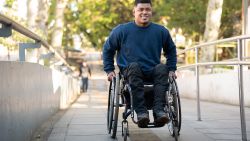
The maximum ADA ramp slope is 1:12, meaning every inch of vertical rise requires at least 12 inches of ramp length. This equals an 8.33% maximum slope.
Additional requirements include:
- Cross slope cannot exceed 1:48 (2%)
- Maximum rise per run is 30 inches
- Ramps rising more than 6 inches require handrails
- Intermediate landings are required for longer rises
Noncompliant slopes are one of the most frequent CASp report findings and often require reconstruction.
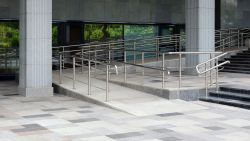
Key ADA ramp size requirements:
- Minimum clear width of 36 inches (excluding handrails)
- Top and bottom landings must be at least 60 inches long
- Landings must match ramp width
- Doorways opening onto ramps require proper maneuvering clearance
- Vertical level changes cannot exceed 1/4 inch
Improper landings, tight turning areas, or obstructed clearances frequently lead to compliance failures and retrofit costs.

Ramps with more than 6 inches of rise must include compliant handrails on both sides. Handrails must be 34–38 inches high, continuous, easy to grip, and properly extended at landings.
Additional safety requirements include slip-resistant surfaces, stable materials, edge protection to prevent wheel drop-offs, and smooth transitions without trip hazards.
Ramp safety deficiencies are a major liability factor in ADA enforcement and accessibility lawsuits.
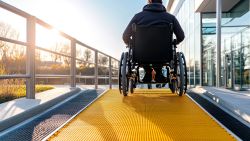
California Title 24 accessibility laws may impose stricter requirements beyond federal ADA standards. CASp inspections verify slope, cross slope, landings, handrails, curb ramp design, and path-of-travel continuity.
A certified CASp report documents compliance conditions, prioritizes risk exposure, and helps property owners reduce lawsuit vulnerability. Ramp violations remain one of the most expensive and frequently cited accessibility barriers in California.

Correcting non-compliant ADA ramps may require regrading, rebuilding ramp runs, modifying handrails, expanding clearances, or redesigning approach routes.
ACR Design & Build provides CASp inspections, ADA consulting, permit coordination, and ADA-compliant construction services to help property owners resolve violations efficiently and protect their business from enforcement and legal risk.
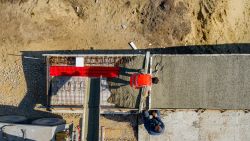
Below are answers to the most common questions property owners ask about ADA wheelchair ramp requirements in California.
What is the maximum ADA ramp slope?
The maximum allowed ADA ramp slope is 1:12, meaning one inch of vertical rise for every twelve inches of ramp length. Slopes steeper than this typically fail CASp inspections and city plan review.
What is the minimum width for an ADA-compliant ramp?
ADA ramps must have a minimum 36-inch clear width, excluding handrails. Narrower ramps are considered noncompliant under ADA and California Title 24 standards.
When are handrails required on ADA ramps?
Handrails are required when a ramp rise exceeds 6 inches. Handrails must be mounted between 34 and 38 inches high and extend beyond the top and bottom of the ramp run.
How long must ADA ramp landings be?
Top and bottom landings must be at least 60 inches long and must remain level to allow safe wheelchair maneuvering and resting.
Does California Title 24 add extra ramp requirements?
Yes. California Title 24 enforces additional accessibility rules beyond federal ADA standards, including stricter slope tolerances, landing geometry, detectable warnings, and path-of-travel compliance.
What happens if a ramp fails a CASp inspection?
A failed CASp inspection can result in required corrections, delayed permits, fines, or increased liability in the event of an ADA accessibility lawsuit.
Who should inspect ADA ramps in California?
A Certified Access Specialist (CASp) should evaluate ramp compliance to ensure the property meets ADA and California accessibility laws and reduces legal risk.



Discover essential ADA ramp design tips, slope guidelines, and inspection standards tailored for physical businesses under Title III.......

Understand ADA accessible parking requirements—striping, signage, and path of travel—for safe, compliant spaces with ACR Design & Build expertise......

Learn the differences between California Accessibility laws and ADA Compliance to protect your business from costly lawsuits......